
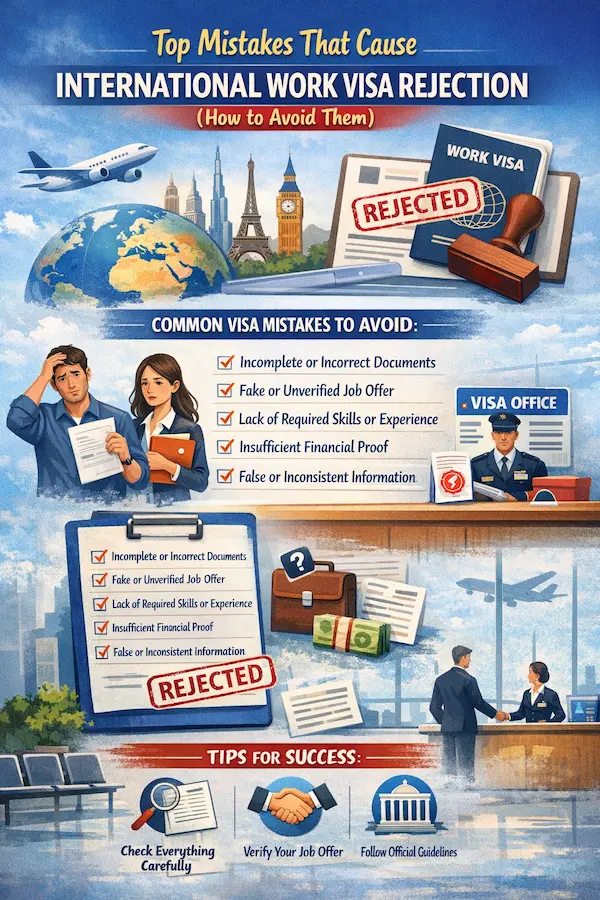
The thing is that the international work visa application is one of the significant steps toward the global career. Nevertheless, a lot of talented workers are denied because of preventable errors. Any minor mistakes in records or qualification may cause delays or even rejection. The most frequent causes of work visa rejection are also known; this knowledge can ensure success in securing the approval.
This is a guide on the major errors that lead to the rejection of international work visa applications and offers viable tips that can assist applicants to come up with more robust and precise visa applications.
Incomplete or Incorrect Documentation.
The reason behind work visa rejection is frequently missing or wrong documents. Visa officials demand exact documents, such as passports, employment agreements, educational diplomas, and financial documents. Any discrepancy in names, dates, or information may put things into perspective.
The applicants are advised to take a good look at document checklists offered by immigration authorities and verify that all the papers are correct, up to date, and translated where necessary.
Lack of a Genuine Job Offer
Most of the nations demand a validated employment opportunity by an authorized employer prior to issuance of a work visa. There is a risk of rejection when proving an unverified, informal, or suspicious job offer. The immigration officers are very careful in inspecting employer credibility and job legitimacy.
The applicants should also make sure that the employer has the right to employ foreigners and the employment opportunity is in accordance with the local requirements of labor market.
Failing to meet Skill / Qualification Requirements.
Every type of work visa has certain requirements in terms of skills, education and experience. It is normal to be rejected when one applies without corresponding to the minimum requirements. There are also certain professions which are licensed or professionally registered in the destination country.
On the eve of application, the candidates are expected to ensure that their qualifications are accepted and in line with visa requirements.
Poorly evidenced Work Experience.
The other biggest reason is the rejection of the visa due to the provision of unclear or unsubstantiated work experience. Failure to provide a detailed employment letter, job description or evidence of professional responsibility may result in the rejection of the application by immigration authorities.
The candidates must hand-in formal experience certificates along with reference letters and supporting documents in order to confirm their professionalism status.
Funding Shortfall or Lack of transparency.
Most nations demand that the applicants demonstrate that they are able to sustain themselves in the financial aspect. Low bank balances, missing transactions or irregular financial statements may be a cause of concern.
The applicants are supposed to give transparent financial documents that will show that they are stable and prepared to meet living costs until the first years of employment.
Valueless or Inconsistent Information.
Feeding wrong, misleading, and inconsistent information is a very grave concern that would result in instant rejection or subsequent penalties. Mistakes that happen accidentally such as personal information, work experience or travel history among others can automatically harm an application.
There must be transparency and truth during the visa application process.
Poor Immigration History
Past overstays, deportations or other immigration violations may have a powerful impact on new applications. The authorities who handle immigration issues are the ones who examine the travel history to determine compliance and credibility.
The applicants who have a history of problems are required to explain and give supporting documents where necessary.
Disregard of Language or Medical Requirements.
Other working visas include language tests or medical tests. They may be rejected due to failure to present the necessary test results or medical reports.
The applicants are to ensure that all the required health and language requirements are upheld and fulfilled in recognized institutions.
Late/Wrong application form Submission.
Late submission of applications, wrong visa category used and submission of applications through the wrong channels usually result in rejection. Every nation has timelines and procedures to follow to the latter.
It is better to avoid unnecessary errors by reading official guidelines and implementing them early.
Bribing Unofficial Agents or Becoming a Victim of Frauds.
It is not advisable to use unlicensed agents or rather to pay illegal fees when it comes to visa applications. False records or counterfeit employment opportunities identified in the processing process will almost always result in dismissal.
From the applicants, short cuts should be avoided by using official immigration portals or trusted employers.
Preventing the likelihood of work visa refusal.
In order to increase the chances of approval, applicants need to thoroughly examine the eligibility requirements, make proper records, and possess credible employers. It is necessary to consult the official immigration websites and consider the country-specific rules.
Being organized, transparent and proactive during the process is one of the major boosters of success rates.
Final Thoughts
The most common factor likely to result in international work visa rejection is the avoidable mistakes and not ineligibility. Knowing the most frequent errors and planning is a way to make their applications better and closer to their global career objectives.
TalentGlobeHub will ensure proper guidance to international job seekers on work visa matters is done with accuracy, ethics, and transparency so that they can be certain of success in their application.