
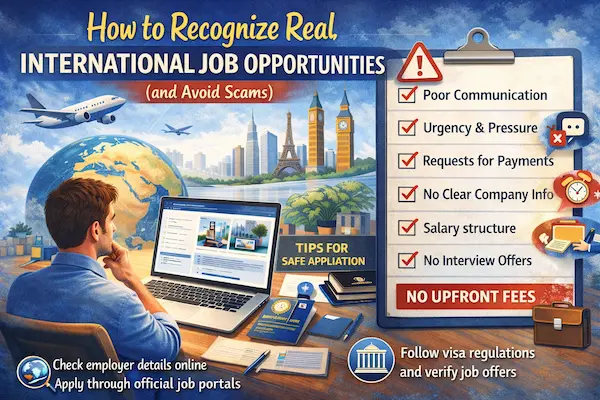
International hiring has exploded over the last few years. Companies now recruit across borders through LinkedIn, remote job boards, and specialized agencies — which is great news if you’re looking for work abroad. The catch is that scammers have grown right alongside it. Fake recruiters, cloned company websites, and “too good to be true” offers cost job seekers real money, stolen documents, and wasted months every year.
The good news: genuine international job offers almost always follow a predictable, verifiable pattern. Once you know what to check, spotting a fake becomes much easier. Here’s how.
What Does a Legitimate International Job Offer Look Like?
A real overseas job comes from a registered company that follows standard hiring practices. Before you get excited about an offer, look for:
- A specific, detailed job description
- Clearly stated salary and benefits
- A proper interview process (not just a form to fill out)
- Visa sponsorship handled through official government channels
Quick tip: Real employers never rush you into a decision, and they never ask you to pay anything upfront — not for “processing,” not for training, not for anything.
Step 1: Check the Company Out Before You Apply
Start by confirming the employer actually exists and is who they say they are.
- Look for a real, professional company website with actual contact details — not just a WhatsApp number.
- Check the email domain. If a recruiter is emailing you from a free Gmail or Yahoo address instead of a company domain, treat that as a warning sign.
- Search for the company in government business registries, on LinkedIn, or through official trade portals.
- Confirm they’re actually licensed to hire foreign workers in that country — not every business is.
Step 2: Read the Job Description Like a Contract
A genuine international job posting spells things out clearly:
- What you’ll actually be doing day to day
- The qualifications and experience required
- Working hours and how long the contract runs
- How pay is structured (base salary, bonuses, overtime, etc.)
Watch out for postings that promise a high salary for almost no experience, describe the benefits in vague, exaggerated terms, or guarantee you the job before any interview has happened.
Step 3: Understand the Normal Hiring Process
Legitimate employers hire in stages, not all at once:
- You submit a resume/CV
- You go through a video or in-person interview
- You receive a written offer letter
If someone offers you a job over WhatsApp or email with no interview at all, be very skeptical — that’s one of the most common scam patterns out there.
Step 4: Never Pay to Get a Job
This is the single biggest rule: real employers do not charge you to hire you.
- Visa costs, if the employer covers them, go directly through the employer or official government channels — never through a personal bank account or a random “agent.”
- If anyone asks you to wire money for “processing fees,” “training deposits,” or “visa guarantees,” stop the conversation. It’s a scam.
(Related read: Top Mistakes That Cause International Work Visa Rejections — and How to Avoid Them)
Step 5: Scrutinize the Offer Letter
A real offer letter should include:
- The company’s full legal name and address
- Your exact job title and salary
- Working hours and contract length
- Actual signatures — not just a logo
Before signing anything, call the company’s HR department directly to confirm the details, and read the letter carefully for spelling or grammar mistakes — scammers often slip up here.
Step 6: Confirm the Visa and Work Permit Details
Legal employment abroad always goes through proper immigration procedures. A real employer will tell you the visa category, roughly how long processing takes, and what documents are officially required. If someone tells you no visa is needed, or guarantees one with zero paperwork, that’s a red flag, not good luck.
Step 7: Be Suspicious of Salary That Sounds Too Good
Scammers use unrealistic pay to hook people fast. Before you get excited:
- Compare the offer to actual market salaries for that role in that country.
- Ask yourself honestly whether the pay matches your skill level and experience.
Step 8: Search for Reviews and Complaints
A quick search goes a long way. Look for reviews, complaints, or scam warnings about the company on forums, review sites, or government consumer-protection pages. Multiple complaints from different people is a serious warning sign.
Step 9: Guard Your Personal Documents
Only hand over sensitive documents — passport copies, ID, certificates — after you’ve been officially selected, and only through secure, verified channels. Scammers frequently collect documents just to misuse them, with no job ever materializing.
Step 10: Learn to Recognize the Red Flags
Across most job scams, the same warning signs keep showing up:
- Unprofessional communication or messy, error-filled emails
- Pressure to accept quickly, “before the offer expires”
- Requests for money or sensitive documents before you’ve even interviewed
- No verifiable company information anywhere online
Step 11: Apply the Safe Way
To keep your job search safe:
- Stick to reputable job portals, official company career pages, or licensed recruitment agencies.
- Verify the employer independently before applying — don’t just take their word for it.
- Check official government immigration portals for accurate visa information.
- Keep copies of every email, offer letter, and document you exchange, just in case.
Final Thoughts
Finding a real job abroad takes research and a healthy dose of skepticism, but it’s absolutely doable. Opportunities are growing every year — and so, unfortunately, are the scams trying to piggyback on them. Slow down, verify everything, and never pay to get hired. That one habit alone will keep you out of most trouble.